

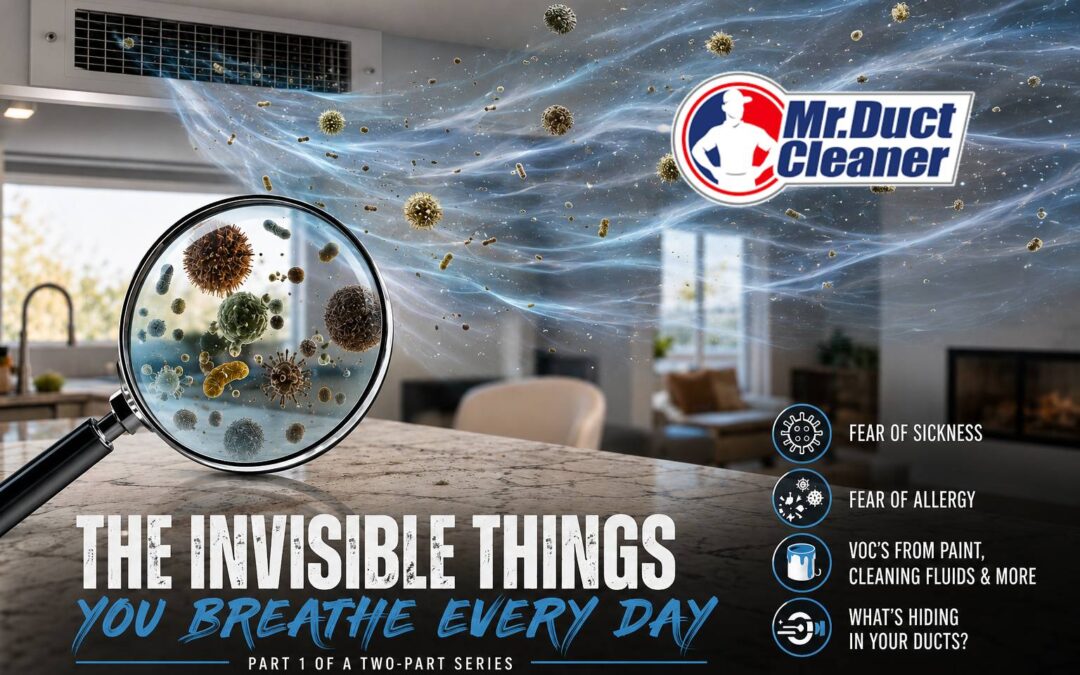
The Invisible Things You Breathe Every Day — Part 1
Most homeowners worry about the things they can see.
Dust on the furniture.
Pet hair on the floor.
Fingerprints on the stainless steel refrigerator.
But what about the things you cannot see?
What if the biggest threats to your indoor air quality are completely invisible?
Volatile Organic Compounds (VOCs).
Airborne allergens.
Viruses.
Bacteria.
Microscopic particles circulating through your HVAC system every single day.
Your home may look spotless while the air inside quietly works against your health, comfort, and sleep.
This is Part One of Mr. Duct Cleaner’s new “Invisible” series — designed to help homeowners better understand what may be hiding in the air they breathe.
Clean Looking Does Not Mean Clean Air
Imagine walking into a kitchen with sparkling countertops and freshly mopped floors.
Everything looks perfect.
Now ask yourself this:
Can you tell by looking whether salmonella bacteria is sitting on that kitchen counter?
Of course not.
The same concept applies to indoor air quality.
You cannot see pollen floating through your return vents.
You cannot see microscopic dust particles cycling through your HVAC system.
You cannot see VOC gases released from paint, cleaning products, candles, carpeting, or furniture.
Yet your body may still react to them every day.
That is why so many homeowners are surprised when they discover their indoor air may actually be more polluted than the air outside.
What Are VOCs?
VOC stands for Volatile Organic Compound.
These are gases released from common household materials and products, including:
- Paints and stains
- Cleaning chemicals
- Air fresheners
- New furniture
- Flooring adhesives
- Carpet
- Building materials
- Laundry products
- Candles and scented products
Some VOC exposure may cause:
- Headaches
- Eye irritation
- Fatigue
- Dizziness
- Respiratory irritation
- Allergy-like symptoms
The difficult part is that many homeowners never associate these symptoms with the air inside their own homes.
Your HVAC System Circulates More Than Air
Your HVAC system is designed to move air throughout your home.
Unfortunately, it can also circulate:
- Dust particles
- Pet dander
- Pollen
- Mold spores
- Bacteria
- VOC-contaminated air
- Debris trapped inside ductwork
Every time your system cycles on, those microscopic particles may continue recirculating throughout your living space.
That is why professional HVAC system cleaning matters.
A clean system helps reduce the buildup of contaminants that may otherwise continue moving through your home day after day.
Allergy Symptoms Indoors May Not Be “Seasonal”
Many homeowners assume allergy symptoms are only caused by outdoor pollen.
But indoor air quality can play a major role in:
- Sneezing
- Congestion
- Dry throat
- Watery eyes
- Persistent coughing
- Poor sleep quality
If symptoms improve when you leave the house but return when you come home, your indoor air may deserve closer attention.
This becomes especially important in tightly sealed modern homes where air circulation is limited and contaminants can remain trapped indoors for long periods of time.
The Problem With “Out of Sight, Out of Mind”
Most people never look inside their ductwork.
And because they cannot see what is inside, they assume everything must be fine.
But your HVAC system works every day of the year.
Over time, buildup happens.
Even homes that appear extremely clean can accumulate contaminants inside the HVAC system that homeowners never realize are there.
That is why routine inspection and cleaning can be an important part of maintaining healthier indoor air quality.
Related Reading
To learn more about what may be hiding inside your HVAC system, read this related Mr. Duct Cleaner article:
Feel the Results of HVAC and Duct Cleaning
Part Two Is Coming Next
In Part Two of the “Invisible” series, we will discuss:
- Why odors are often warning signs
- How moisture creates hidden problems
- What homeowners misunderstand about “clean smelling” air
- Why some contaminants continue circulating long after the original source is gone
Ready to Learn What’s Really Circulating Through Your Home?
You may not be able to see what is moving through your HVAC system — but that does not mean it is harmless.
A professional HVAC system inspection and cleaning can help homeowners better understand the condition of their indoor air system and reduce the buildup of unwanted contaminants.
For a free estimate, visit Mr. Duct Cleaner or call 844-444-DUCT.