
Maybe you even spend a little extra for a better filter.
So your air ducts should stay clean, right?
Not exactly.
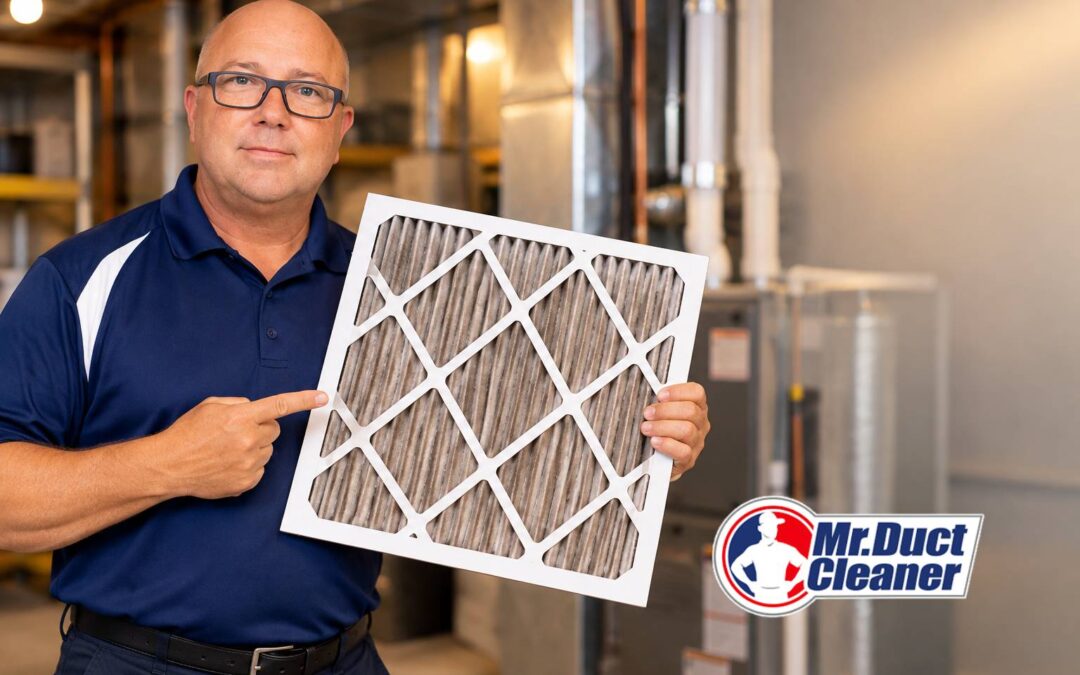
Your furnace or HVAC filter plays an important role in your home’s heating and cooling system. It can capture dust and other airborne particles as air passes through it, helping prevent some of that material from continuing through the system.
But there’s one thing your furnace filter can’t do:
It can’t clean your air ducts.
And understanding the difference can help you take better care of your entire HVAC system.
What Does Your Furnace Filter Actually Do?
In a typical forced-air HVAC system, air from your home is drawn through return vents and travels back toward the furnace or air handler.
Before that air is heated or cooled and sent back into your home, it passes through the HVAC filter.
Think of the filter as a checkpoint.
As air passes through it, the filter captures some of the airborne particles traveling with it. How effectively it captures different-sized particles depends partly on the type and efficiency of the filter.
That’s why changing your filter regularly is such an important part of HVAC maintenance.
But there’s an important distinction:
A filter cleans air passing through the filter. It doesn’t clean the surfaces inside your ductwork.
Your Filter Can’t Reach Back Into Your Ductwork
Imagine putting a new filter into an HVAC system that has already been operating for years.
There may already be dust or debris sitting inside portions of the system.
Installing a brand-new filter doesn’t make that material disappear.
The filter can’t travel backward through the return ducts.
It can’t reach into supply ducts.
It can’t remove material adhering to the interior surfaces of the system.
And it can’t remove something that fell directly through a floor or wall register.
That’s simply not what an HVAC filter was designed to do.
So How Does Dust and Debris Get Into Air Ducts?
Even in a well-maintained home, there are plenty of potential sources.
Dust is produced by everyday life. Pets shed hair and dander. Fibers come from clothing, carpeting and furniture. Outside material enters when doors and windows open.
Home improvement projects can create especially large amounts of dust.
Registers can also provide a direct path into portions of the duct system. If you’ve ever removed a floor register and found pet hair, crumbs, small toys or other debris underneath it, you’ve seen this firsthand.
Leaks or gaps in some duct systems can also allow material from surrounding spaces to enter the system.
Over the years, some material can accumulate on interior HVAC and duct surfaces.
A filter can help reduce the amount of new airborne material entering portions of the system, but it doesn’t remove what’s already there.
“But I Buy the Really Good Filters”
That’s a good thing—provided you’re using a filter appropriate for your HVAC system.
Filters are commonly rated using MERV, or Minimum Efficiency Reporting Value. Generally, a higher MERV rating means greater efficiency at capturing certain particles.
But don’t assume that simply buying the highest-MERV filter you can find is automatically the best choice for your particular furnace or air handler.
Your HVAC system has to be able to move air through the filter.
The U.S. Environmental Protection Agency recommends using a high-efficiency filter that your system can accommodate and notes that homeowners may need to consult an HVAC professional to determine the appropriate filtration level for their equipment.
Regardless of its rating, however, even an excellent filter is still a filter—not a duct-cleaning system.
Changing Your Filter Is Still Extremely Important
None of this means furnace filters aren’t effective or aren’t important.
Quite the opposite.
Regular filter changes are one of the simplest things homeowners can do to help keep dirt from entering HVAC components and ductwork.
A neglected filter can become loaded with debris, and filters should be replaced according to the manufacturer’s recommendations and the conditions in your home.
Homes with pets, remodeling activity or other sources of airborne material may require more frequent attention.
It’s also important that the filter fits correctly so air isn’t simply bypassing it around the edges.
Good filtration is part of preventing contamination. Professional HVAC system cleaning addresses contamination that is already present.
Those are two different jobs.
Does That Mean Everyone Needs Their Air Ducts Cleaned?
No.
Air duct cleaning shouldn’t be sold as something every homeowner automatically needs on a fixed schedule.
The U.S. Environmental Protection Agency recommends considering duct cleaning on an as-needed basis and identifies situations such as substantial visible dust or debris, particles being released from supply registers, vermin infestation, or certain moisture and mold problems as reasons a system may warrant further investigation.
Other circumstances can also make inspecting the system worthwhile.
Have you recently completed a major remodeling project?
Did you purchase an older home without knowing its HVAC maintenance history?
Are you seeing significant debris inside accessible portions of the system?
Has something happened in the home that may have introduced unusual amounts of dust or debris?
Those are good reasons to look before you assume.
A reputable air duct cleaning professional should be able to inspect the system and show you what is actually there.
Your Filter and Your Air Ducts Work Together—But They Don’t Do the Same Job
Here’s the easiest way to remember it:
Your HVAC filter helps capture particles carried by air passing through the filter.
Air duct cleaning removes accumulated material from the HVAC system when cleaning is warranted.
Changing your filter regularly can help keep your system cleaner.
But even the best furnace filter can’t reach backward into years of ductwork and clean what’s already there.
So keep changing those filters.
Just don’t expect them to do a job they weren’t designed to do.
Wondering What’s Actually Inside Your Air Ducts?
Mr. Duct Cleaner provides professional air duct cleaning services using specialized equipment and procedures designed to remove accumulated dust and debris from HVAC systems.
If you’re unsure whether your system needs cleaning, start by finding out what’s actually there.
Visit mrductcleaner.com or call 844-444-DUCT for a Free Estimate.