
Part 1 of 3: Remodeling & Your HVAC System
True story.
I’m in the middle of remodeling my condo. We’re replacing the flooring in the kitchen and living room, installing all-new cabinets, and replacing the appliances.
We were smart enough to make sure we weren’t there during the demolition phase. Now we’re living in the condo while the rest of the work progresses — if you can call squeezing into the two back bedrooms “living.”
I thought we were doing everything right.
Then my contractor told me my HVAC unit was “leaking.”
My First Thought: How Much Is This Going to Cost?
You can probably imagine where my mind went immediately.
How much is a new HVAC system going to cost me?
That was especially concerning because I had the system serviced just a month earlier. Everything checked out. The coils were clean, the refrigerant level was good, and the entire system was operating properly.
So how could something suddenly be wrong?
My contractor told me they had been changing the HVAC filter every other day because of all the remodeling dust. They had also “tried” to close off the vents to prevent construction dust and debris from getting into the system.
It sounded like we had taken reasonable precautions.
Apparently, they weren’t enough.
We Found Remodeling Dust Inside the HVAC System
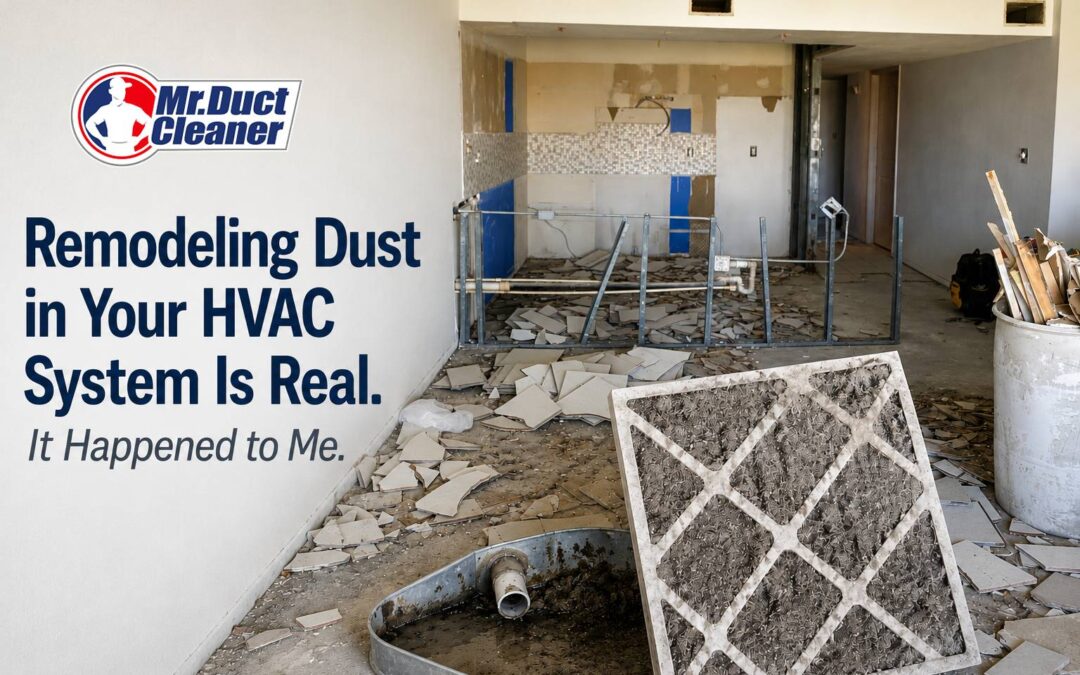
Upon closer inspection, we discovered a significant amount of gunk and debris built up in the HVAC drain pan.
The drain was clogged.
Water was overflowing onto the floor.
And what was contributing to that mess?
Remodeling dirt and dust that had made it past the HVAC filter.
That’s when I had one of those moments where you realize you really should have known better.
I write these blogs!
I regularly talk about how HVAC filters are important, but they’re not perfect. I talk about dust, debris, indoor air quality, and how contaminants can make their way through a home’s heating and cooling system.
I’ve even written about why you should consider having your air ducts cleaned after replacing flooring.
Yet somehow, I didn’t think it could happen to me.
It did.
Your HVAC Filter Can’t Catch Everything
A home remodeling project can create an enormous amount of airborne dust.
Removing flooring, cutting materials, sanding, drilling, drywall work, installing cabinets, and simply walking through a construction area can continually put fine particles into the air.
You can vacuum. You can sweep. You can change HVAC filters frequently.
You can even try to cover the supply registers.
But if your HVAC system is operating during the remodeling process, airborne particles can still find their way into the system.
In my case, we were changing the filter every other day, and remodeling debris still got through.
That’s what really caught my attention.
If Remodeling Dust Is There, Where Else Is It?
Once I saw what had accumulated in the drain pan, another question immediately occurred to me:
If that much remodeling dust made it into my HVAC unit, what’s inside my air ducts?
That’s the part homeowners don’t necessarily see.
You can wipe down your new cabinets. Mop your new floors. Clean the countertops. Vacuum the furniture and remove the last traces of visible construction dust.
The house can look perfectly clean.
But your HVAC system moves air through areas you can’t easily see.
If remodeling dust and debris have made their way into the ductwork or other HVAC components, cleaning the visible surfaces in your home doesn’t necessarily remove what’s hiding inside the system.
And when that system starts moving air through your home again, what’s happening to that leftover dust?
That’s something I hadn’t given enough thought to before my own remodeling project.
What About Indoor Air Quality After Remodeling?
This experience also made me think about the air we’re breathing.
If construction dust has made its way into the HVAC system, I have to wonder what effect all of that remodeling has had on the indoor air quality in my condo.
After investing in new flooring, cabinets, appliances, and all the other improvements that go into a major remodel, the last thing I want is leftover construction dust circulating through the home.
Fortunately, I know what I’m going to do once the project is finished.
I’m going to have the air ducts and entire HVAC system professionally cleaned.
And yes, I’ll change that filter one more time.
That’s a much better outcome than the $15,000 HVAC replacement I immediately pictured when somebody told me the system was “leaking.”
But I Still Have One Big Question
Knowing how to clean up after a remodeling project is one thing.
What I really want to know now is:
What should I have done differently before and during the remodel?
We changed filters every other day.
We tried to close off the vents.
We thought we were protecting the HVAC system.
And remodeling dust still got in.
That’s why this story isn’t over.
Coming Next: How to Protect Your HVAC System During a Remodel
In Part 2 of our Remodeling & Your HVAC System series, we’ll look at how construction dust gets into your heating and cooling system and, more importantly, what homeowners and contractors can do before and during a remodeling project to help protect the HVAC system.
Then, in Part 3, we’ll look at what happens after the contractors leave, what may be hiding inside your HVAC system and ductwork, and why the final cleanup after a remodel shouldn’t stop with the surfaces you can see.
Because I’ve learned something from my own remodeling experience:
Just because your newly remodeled home looks clean doesn’t mean your HVAC system is.
If you’re remodeling now or have recently completed a renovation, Mr. Duct Cleaner can help you determine the right next step for your home’s HVAC system.
Contact Mr. Duct Cleaner today for your FREE Estimate.
mrductcleaner.com | 844-444-DUCT