
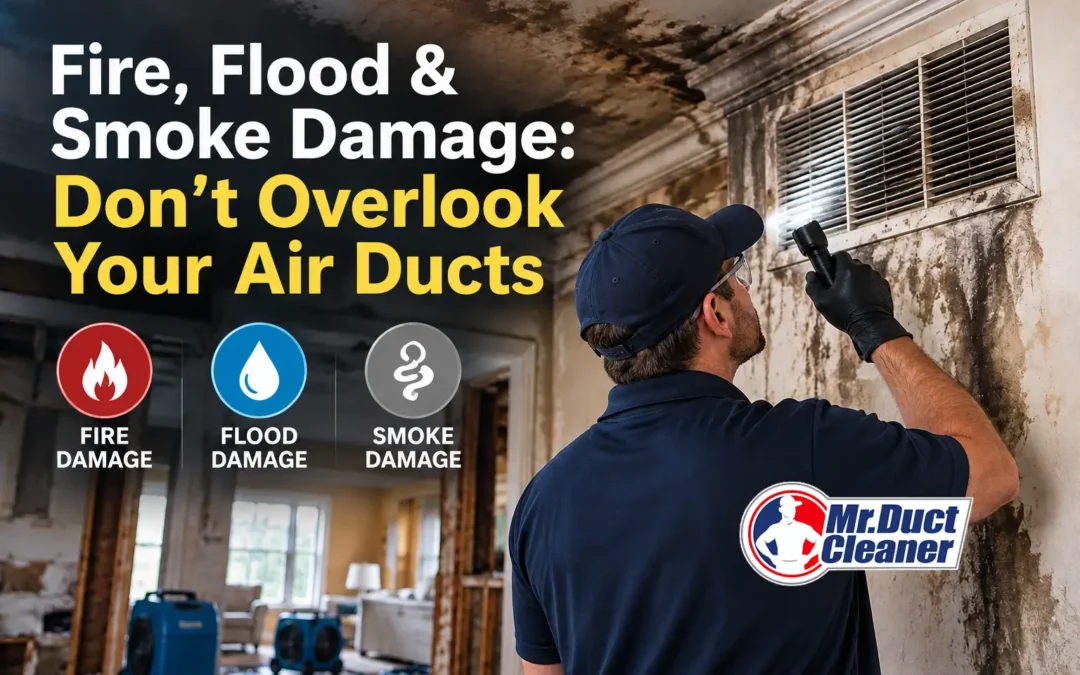
But what about the HVAC system?
Your home’s heating, ventilation, and air conditioning system can also be affected by a property disaster. Smoke, soot, moisture, and other contaminants may enter the ductwork and create problems that aren’t immediately apparent.
Here’s something many homeowners don’t realize: Professional HVAC and air duct cleaning may be covered by homeowners insurance when it’s necessary to restore a home following a covered loss.
Understanding when that coverage may apply, and involving the right professionals early, can make a meaningful difference in the restoration process.
How Fire and Smoke Damage Can Affect Your HVAC System
Even when a fire is contained to one area of a home, smoke and soot can travel well beyond the location of the flames.
If the HVAC system is operating during a fire or smoke event, airborne contaminants may be drawn into return vents and distributed through portions of the ductwork.
Depending on the circumstances, smoke-related residue may accumulate on:
- Supply and return air ducts
- Registers and ventilation grilles
- Blower assemblies and internal HVAC components
- Evaporator coils and other accessible system surfaces
- Air filtration components
These deposits may contribute to persistent odors or introduce contaminants when the HVAC system operates.
In some cases, professional cleaning can be an important part of restoring the affected HVAC system. Other situations may require additional remediation or replacement of damaged components.
Water Damage and Flooding Present Different Challenges
Water damage can also affect HVAC equipment and ductwork, particularly when flooding reaches floor-level registers, crawlspaces, basements, or mechanical equipment.
Moisture entering ductwork or HVAC components can create conditions that support microbial growth, particularly when materials remain wet.
The appropriate response depends on the type of water involved, the extent of contamination, and the materials affected.
For example, ductwork exposed to clean water may require a different restoration approach than ductwork contaminated by sewage or floodwater.
Some materials, including certain types of internally lined or fiberglass ductwork, may need to be replaced rather than cleaned when they become contaminated.
Professional assessment is essential before deciding whether cleaning, remediation, or replacement is appropriate.
If your HVAC system has been exposed to floodwater or suspected microbial contamination, avoid operating it until a qualified professional has evaluated the situation.
Does Homeowners Insurance Cover Air Duct Cleaning After a Disaster?
The answer is: It may.
When a homeowners insurance policy covers a fire, smoke event, or other sudden property loss, necessary cleaning or restoration of affected HVAC components may qualify as part of the covered repair work.
For example, if a covered kitchen fire spreads smoke and soot through the home’s ventilation system, professional HVAC cleaning may be included in the restoration scope when the damage is documented and the work is determined to be necessary.
However, coverage is not automatic.
Insurance companies evaluate claims based on factors such as:
- The cause of the property damage
- The terms, conditions, and exclusions of the insurance policy
- Whether the HVAC system was directly affected
- Documentation supporting the need for cleaning or restoration
- The repair or remediation work determined to be necessary
It’s also important to understand that standard homeowners insurance policies generally exclude damage caused by rising floodwater unless separate flood insurance or applicable coverage is in place.
Routine duct cleaning, ordinary dust accumulation, and maintenance-related issues generally aren’t covered simply because a homeowner requests cleaning.
The important distinction is whether HVAC cleaning is a necessary part of restoring damage caused by an insured event.
Why Restoration Companies Should Evaluate HVAC Systems Early
When a restoration contractor responds to a fire, smoke, or water damage claim, the HVAC system should be considered during the initial assessment.
After all, restoring a property’s visible surfaces while overlooking potentially affected ductwork may leave part of the restoration process incomplete.
This is where working with a professional air duct cleaning specialist can be especially valuable.
A qualified HVAC cleaning company can help restoration contractors:
- Evaluate accessible ductwork and HVAC components for contamination
- Identify areas that may require specialized cleaning
- Document visible conditions and recommended services
- Coordinate HVAC cleaning with other restoration activities
- Determine when additional evaluation or component replacement may be necessary
Early coordination can also help prevent scheduling delays and avoid unnecessary duplication of work.
For restoration professionals, having a trusted HVAC cleaning partner available can make the overall process more efficient.
Documentation Matters When Insurance Is Involved
Insurance claims often require documentation explaining why specific restoration services are necessary.
For HVAC and duct cleaning, that may include photographs of affected components, observations of smoke or soot deposits, evidence of water intrusion, and a written description of recommended work.
The restoration contractor, HVAC cleaning specialist, and insurance adjuster may all play a role in establishing an appropriate scope of work.
Homeowners should communicate with their insurance carrier or adjuster before authorizing nonemergency services when coverage or reimbursement is uncertain.
The goal is to identify necessary HVAC restoration work, document it appropriately, and determine whether it falls within the covered claim.
A Specialized Partner for Restoration Professionals
Fire and water damage restoration often requires multiple specialized trades working together.
Restoration companies may handle water extraction, structural drying, demolition, cleaning, and reconstruction. Professional HVAC and duct cleaning requires its own equipment, procedures, and technical knowledge.
Mr. Duct Cleaner works with homeowners, businesses, and industry professionals to provide specialized air duct and HVAC system cleaning services.
For restoration contractors, insurance professionals, and property managers, involving a qualified duct cleaning specialist when HVAC contamination is suspected can help ensure that this important part of the property receives appropriate attention.
The ideal time to make that connection is during the initial restoration assessment, before the project progresses too far.
Don’t Overlook Your HVAC System After Property Damage
A fire, flood, or smoke event can affect more than the surfaces you can see.
Your HVAC system may require professional evaluation and cleaning as part of restoring the property, and those services may qualify for insurance coverage when they result from a covered loss.
Whether you’re a homeowner navigating an insurance claim or a restoration professional coordinating repairs, addressing potential HVAC contamination early can help support a more complete restoration.
Need professional HVAC or air duct cleaning following fire, smoke, or water damage?
Contact your local Mr. Duct Cleaner to discuss your situation and determine whether professional cleaning may be appropriate.
Visit mrductcleaner.com or call 844-444-DUCT for a Free Estimate.
Insurance coverage varies by policy, cause of loss, and individual claim. Mr. Duct Cleaner does not determine insurance eligibility or guarantee claim approval.