
Mold Remediation Is Complete. But What About Your HVAC System?
When homeowners discover mold, their attention naturally goes to the source of the problem.
A leaking pipe. A wet basement. Water damage behind a wall. A roof leak. Maybe an area that stayed damp long enough for mold to develop.
Once the moisture problem has been corrected and the affected materials have been professionally remediated, it can feel like the problem is over.
But there may be another part of the home worth considering:
The HVAC system.
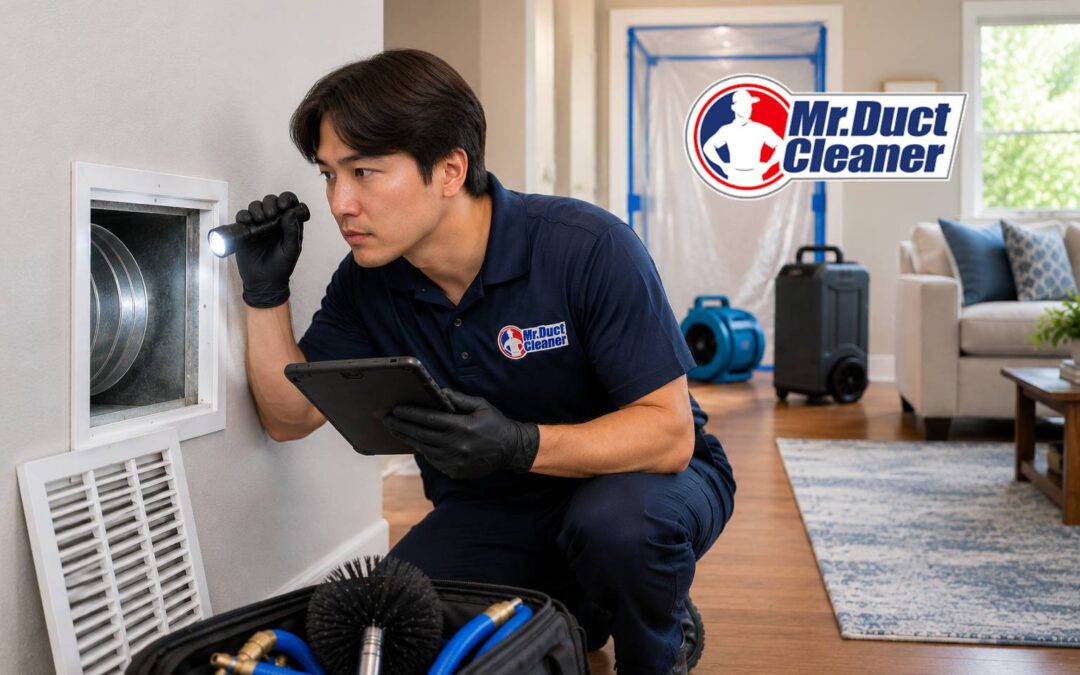
Your heating and cooling system moves air throughout your home. Depending on the circumstances surrounding a mold or water-damage event, portions of that system may need to be evaluated as part of the overall remediation process.
In fact, there is now an industry standard specifically addressing this issue.
What Is ANSI/IICRC S590?
The ANSI/IICRC S590 Standard for Assessing HVAC Systems Following a Water, Fire, or Mold Damage Event was first published in 2023.
Despite some confusion surrounding the standard, S590 isn’t limited to large commercial buildings. It specifically addresses HVAC assessments in residential, commercial, institutional, and healthcare buildings.
That means homes are included.
The purpose of S590 isn’t to say that every HVAC system must automatically be cleaned after mold is discovered.
Instead, the standard provides procedures for professionals to assess an HVAC system following a water, fire or mold event and determine what portions of the system may have been affected.
That’s an important distinction.
Why Consider the HVAC System After Mold Remediation?
Your HVAC system isn’t just the furnace and air conditioner.
It includes return ducts, supply ducts, registers, grilles, blowers and numerous other components involved in moving conditioned air through your home.
Depending on where mold or water damage occurred, how extensive the problem was and whether the HVAC system was operating during the event, contaminants may potentially reach portions of the air-handling system.
The HVAC system can therefore be one of the things that should be considered when evaluating the overall impact of a mold event.
Professional mold-remediation standards recognize this as well. The ANSI/IICRC S520 Standard for Professional Mold Remediation applies to residential as well as commercial and institutional buildings and specifically includes HVAC remediation among the subjects it addresses.
What Does S590 Mean To Homeowners
S590 is an assessment standard, not a blanket requirement that every home undergoing mold remediation also receive air-duct cleaning.
The circumstances matter.
An HVAC assessment following a mold, water or fire event is intended to help determine whether components of the system were affected and, when appropriate, what restoration work may be necessary.
In some situations, the HVAC system may not have been affected.
In others, professional cleaning or restoration may be recommended.
The important point is not to simply assume either way.
If Cleaning Is Needed, How Should It Be Done?
If an HVAC system does require cleaning or restoration following a mold-related event, this isn’t the time for a quick vacuuming of a few registers.
The National Air Duct Cleaners Association, or NADCA, publishes the ACR Standard for the Assessment, Cleaning and Restoration of HVAC Systems.
The standard establishes industry-backed procedures for evaluating HVAC cleanliness and guiding the cleaning and restoration of HVAC components.
This is one reason choosing an experienced, properly trained air-duct cleaning company matters — particularly when the work involves more than ordinary accumulated dust and debris.
Mold Remediation Should Address the Whole Problem
Professional mold remediation is about more than removing what you can see.
The source of the moisture needs to be identified and corrected. Affected building materials need to be properly addressed. And depending on the circumstances, the HVAC system may deserve attention as part of that process.
That’s the real takeaway from standards such as S590.
If your home has experienced significant mold or water damage, don’t automatically assume your HVAC system is contaminated.
But don’t automatically assume it isn’t, either.
Have it evaluated when the circumstances warrant it.
Mr. Duct Cleaner follows industry-recognized practices for professional HVAC and air-duct cleaning. If you’ve recently completed mold remediation or experienced significant water damage and have questions about the condition of your HVAC system, we’re happy to help determine whether professional cleaning may be appropriate.
Visit mrductcleaner.com or call 844-444-DUCT for a Free Estimate.