


Can Dirty Air Ducts Trigger a Commercial Fire Alarm?
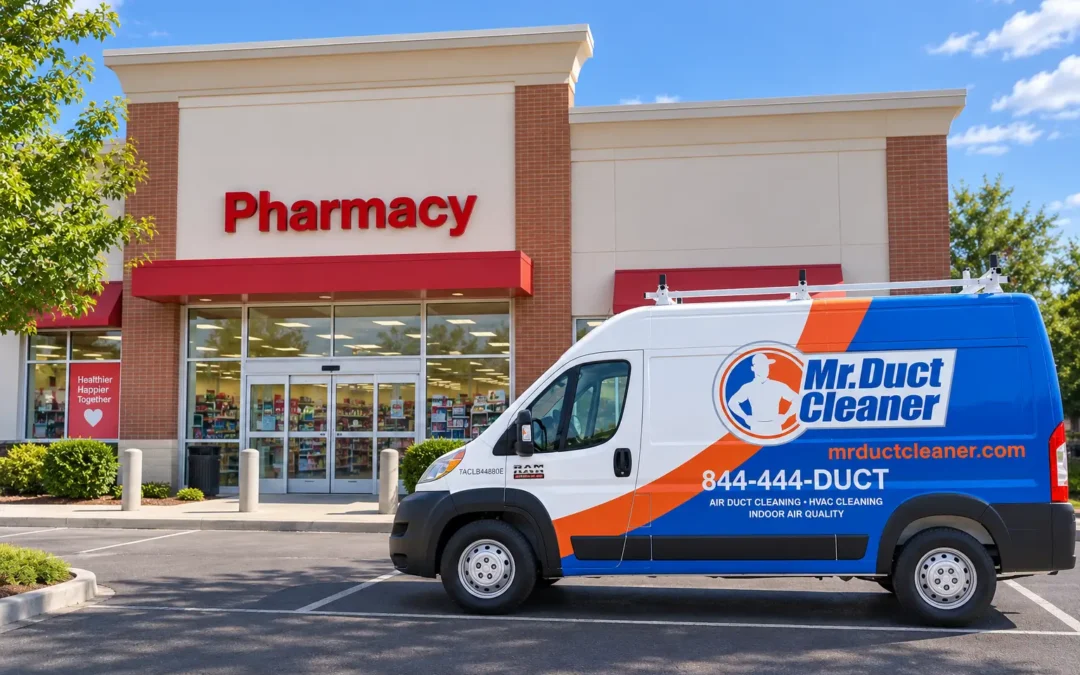
During a recent sales meeting, one of our franchisees shared an interesting story about a commercial opportunity involving a major retailer.
When the franchisee arrived to look at the HVAC system, an employee commented that it was about time someone checked it out. According to the employee, they had been experiencing problems with their fire or smoke alarm, and the condition of the HVAC system was suspected of contributing to the problem.
That raises an interesting question: Can a dirty commercial HVAC system actually cause a smoke alarm to go off?
The answer is yes, it can happen under certain circumstances — but there’s more to the story than simply having dirty air ducts.
Commercial HVAC Systems May Have Smoke Detectors in the Ductwork
Many commercial buildings have smoke detectors installed within or associated with their HVAC duct systems. These detectors are designed to detect smoke traveling through the HVAC system and can be used to shut down air-handling equipment to help prevent smoke from being distributed throughout a building.
Unlike the smoke detector you may have on the ceiling at home, these detectors are exposed to air moving through the HVAC system.
And that air doesn’t always contain just smoke.
It can also carry dust, lint, fibers, contaminants and other debris.
Dust and Contaminants Can Be a Problem for Smoke Detectors
Smoke detectors are designed to recognize changes in the air that may indicate the presence of smoke. Very fine airborne dust and other contaminants can sometimes enter or interfere with a detector’s sensing chamber.
Fire-alarm manufacturers recognize this issue. Their maintenance instructions commonly address the need to keep smoke-detector sensing chambers free from accumulated dust, contaminants and debris.
Under certain conditions, enough airborne dust or contaminants reaching a detector can contribute to what is commonly called a nuisance alarm — an alarm activation when there isn’t actually a fire.
Modern smoke detectors may have technology designed to compensate for gradual dust accumulation. Depending on the detector and system, excessive contamination may also result in a maintenance or trouble indication rather than an alarm.
That’s why it would be inaccurate to say that every dirty air duct is capable of setting off a fire alarm.
The Difference Between Dirty Ducts and What’s Moving Through Them
Dust simply resting on the interior surface of ductwork isn’t necessarily going to trigger an alarm.
The greater concern is dust, contaminants and debris becoming airborne and traveling through the HVAC system, where they may encounter a duct-mounted smoke detector.
There can be many reasons for excessive dust and contaminants in a commercial HVAC system. Construction and remodeling projects, years of accumulation, poor filtration, maintenance issues and activities within the building can all contribute.
That’s also why unexplained fire or smoke alarm activations should never automatically be blamed on dirty ductwork.
A building experiencing repeated alarms should have its fire-alarm system evaluated by a qualified fire-alarm professional.
Your HVAC System May Be Telling You Something
The story our franchisee encountered is a good reminder that commercial HVAC systems often operate quietly in the background until something gets someone’s attention.
Sometimes it’s visible dust.
Sometimes it’s poor airflow.
Sometimes it’s an unusual odor.
And occasionally, it may be another building system that draws attention to what’s happening inside the ductwork.
Commercial air duct cleaning isn’t a substitute for fire-alarm inspection or maintenance. But when excessive dust, contaminants and debris have accumulated inside an HVAC system, it’s worth finding out what’s there and determining whether professional cleaning is appropriate.
Mr. Duct Cleaner provides professional air duct cleaning services for commercial facilities as well as residential properties.
Visit mrductcleaner.com or call 844-444-DUCT for a Free Estimate.