
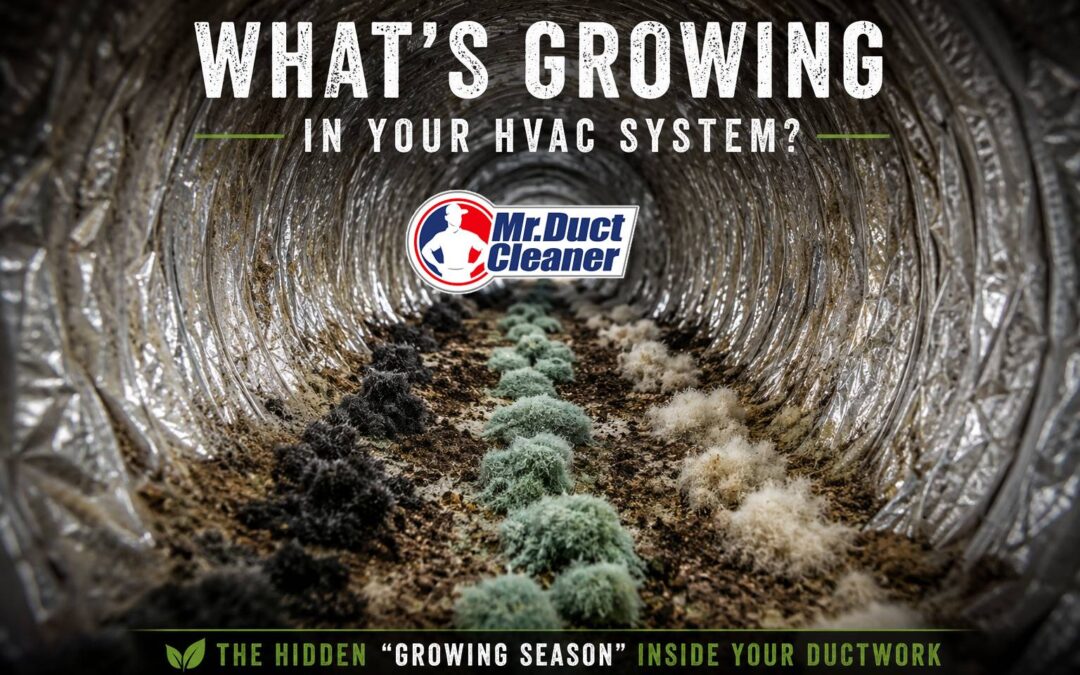
The Hidden “Growing Season” Inside Your Ductwork
Most homeowners think of “growing season” as something that happens outside — green grass, blooming flowers, and backyard gardens coming to life in the spring and summer.
But there may be another growing season happening inside your home… and it’s hiding in your HVAC system and ductwork.
Your heating and cooling system creates the perfect environment for unwanted biological growth. Darkness. Moisture. Dust. Organic particles. Limited airflow in certain areas. Combine all of that, and your duct system can become an ideal breeding ground for mold and other contaminants.
At Mr. Duct Cleaner, we’ve seen firsthand what can accumulate inside residential and commercial HVAC systems — and it’s often far worse than homeowners imagine.
Mold: More Common Than Most People Realize
Mold is a diverse group of fungi that exists both indoors and outdoors. Some varieties are relatively harmless to healthy individuals, while others can create serious concerns depending on the type of mold and the sensitivity of the people exposed to it.
One important thing homeowners should understand is this:
Not all mold affects people the same way.
Some individuals may experience little to no reaction, while others can develop symptoms such as:
- Sneezing
- Chronic coughing
- Sinus irritation
- Headaches
- Fatigue
- Eye irritation
- Respiratory discomfort
- Worsened asthma or allergy symptoms
For families with elderly individuals, children, or people with respiratory conditions, indoor air quality becomes even more important.
The Mold Types People Hear About Most
When homeowners hear the word “mold,” two names often come up:
Stachybotrys
Often referred to as “black mold,” Stachybotrys is one of the more concerning molds people hear about. It typically thrives in areas with prolonged moisture exposure and water damage.
Aspergillus
Aspergillus is another common type of mold frequently found indoors. Some species are relatively harmless, while others may trigger allergic reactions or respiratory issues in sensitive individuals.
The important thing to remember is this:
Color alone does not identify mold type.
Green, black, white, gray, or brown growth can all represent different species. Proper identification and testing should always be handled by qualified professionals when needed.
Why HVAC Systems Become a Problem Area
Your HVAC system constantly circulates air throughout your home. Over time, dust, pollen, pet dander, moisture, and debris can accumulate inside the system.
If moisture is introduced — from high humidity, condensation, water leaks, or improperly maintained components — microbial growth can begin.
Once growth starts inside ductwork or HVAC components, the system may continuously circulate particles throughout the home every time the system runs.
That’s why professional HVAC cleaning and inspection matters.
We Treat Every Job Seriously
At Mr. Duct Cleaner, we approach every cleaning with the same mindset:
We clean every system as if it contains Stachybotrys.
Why? Because homeowners deserve peace of mind.
Our technicians don’t minimize contamination concerns or cut corners. We use professional equipment and proven cleaning processes designed to remove dust, debris, and contamination from the HVAC system as thoroughly as possible.
Whether the issue turns out to be harmless buildup or something more concerning, our goal remains the same:
Help create a cleaner, healthier indoor environment for your family.
Signs Your HVAC System May Need Attention
Some warning signs may include:
- Musty odors when the HVAC system runs
- Excessive dust around vents
- Visible buildup near registers
- Recent water damage or flooding
- Allergy symptoms that worsen indoors
- Inconsistent airflow
- Dark spotting around vents or HVAC components
Even if you don’t see visible mold, contamination can still exist deeper inside the system.
The Bottom Line
Your HVAC system should move clean, comfortable air throughout your home — not circulate unwanted contaminants.
As the outdoor growing season begins, it may be worth asking an important question:
What’s growing inside your HVAC system?
If you have concerns about mold, indoor air quality, or duct contamination, professional inspection and cleaning can help provide answers and peace of mind.
For a free estimate, visit Mr. Duct Cleaner or call 844-444-DUCT.