
Most homeowners know they should change their HVAC filters regularly. Many also make an effort to keep their air vents free of dust and debris. But there’s one important part of the heating and cooling system that often gets overlooked: the return air vent.
You probably walk past it every day without giving it a second thought. It might be in a hallway, near the floor in your living room, or high on a wall. Unlike the vents that deliver warm or cool air into your rooms, return vents have a different job.
And when they’re neglected, they can create problems for your entire HVAC system.
What Does a Return Air Vent Actually Do?
Your HVAC system relies on a continuous cycle of air circulation.
Supply vents deliver conditioned air into your home, while return vents draw indoor air back toward the heating and cooling equipment. That returning air typically passes through a filter before being heated or cooled and circulated again.
Think of it this way: supply vents push air out, and return vents pull air in.
Both sides of that process are essential for maintaining comfortable temperatures and proper airflow throughout your home.
When return vents become obstructed by dust buildup, pet hair, furniture, or other household items, the system may struggle to move the volume of air it was designed to handle.
Why Return Vents Get So Dirty
Because return vents continuously draw air from living spaces, they can collect a surprising amount of household debris.
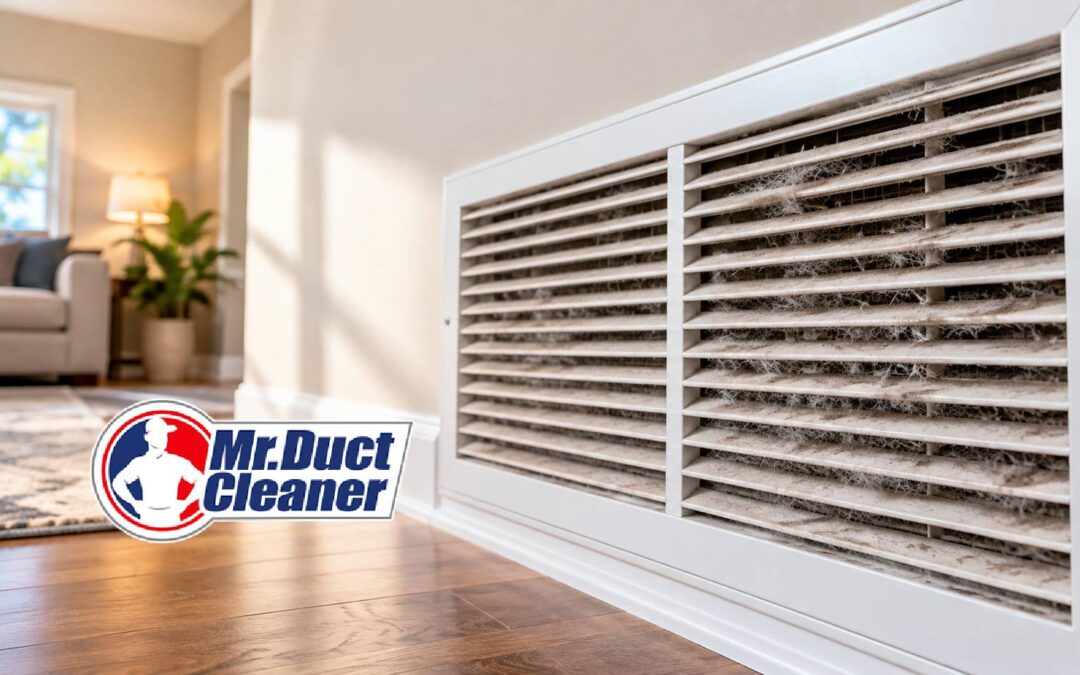
Dust, pet hair, carpet fibers, and lint can accumulate on the grille and surrounding surfaces. In homes with pets, it’s not unusual to find a noticeable layer of hair clinging to the return vent.
The location of the vent can make matters worse. Returns positioned near floors may collect more pet hair and debris, while those in busy hallways can accumulate dust stirred up by everyday activity.
And here’s something many homeowners don’t realize: cleaning the visible grille doesn’t necessarily mean the ductwork behind it is clean.
Depending on the system’s design, debris can also accumulate inside the return ductwork over time.
Five Signs Your Return Vent Needs Attention
You don’t have to be an HVAC technician to recognize some common warning signs.
1. Visible dust buildup. If the return grille is covered in dust or pet hair, it’s time to clean it and check whether anything is restricting airflow.
2. Whistling or unusual airflow noises. A return vent that whistles or makes unusual noises may indicate an airflow restriction, an undersized return, or another system issue.
3. Uneven heating and cooling. If certain rooms are consistently warmer or cooler than others, restricted airflow may be one contributing factor.
4. Excessive dust around the vent. Dust accumulating around a return grille can be a sign that the area needs cleaning. It doesn’t automatically mean the entire duct system is dirty, but it’s worth investigating.
5. Reduced airflow or longer system run times. An airflow restriction can affect HVAC performance and may cause the equipment to work harder to maintain the desired temperature.
These symptoms can have several causes, so a professional evaluation may be necessary to determine what’s happening.
The Hidden Problem Behind the Grille
Here’s where things get interesting.
A homeowner might remove a return grille, wipe it down, vacuum the opening, and assume the job is finished.
But what about the ductwork beyond that opening?
Over time, dust and debris can accumulate inside return ducts, particularly in systems that have experienced neglected filter maintenance, remodeling work, or years of operation without an assessment of the ductwork.
A return duct may extend through walls, ceilings, or floors before connecting to the HVAC equipment. Much of that ductwork is completely out of sight.
At Mr. Duct Cleaner, we understand that a complete air duct cleaning service involves more than simply removing dust from the vents you can see.
When cleaning is warranted, the return side of the system deserves attention along with the supply ductwork and other accessible components included in the service.
What Can Homeowners Do?
The good news is that keeping your return vents in better condition doesn’t require a lot of effort.
Start by vacuuming the return grille regularly using a soft brush attachment. If the grille is removable, you can clean it according to the manufacturer’s recommendations.
Make sure furniture, rugs, curtains, and other household items aren’t blocking airflow.
Check your HVAC filter regularly and replace it according to the manufacturer’s guidance and your household’s conditions. Homes with pets or higher dust levels may require more frequent filter changes.
And remember that return vents aren’t necessarily equipped with individual filters. Many systems use a central filter located at the air handler or furnace. Installing additional filters at return grilles without professional guidance can create unwanted airflow restrictions.
Most importantly, don’t assume that a clean-looking vent means the entire system is free of accumulated debris.
Should You Have Your Return Ducts Professionally Cleaned?
Not every HVAC system needs professional duct cleaning on a fixed schedule.
However, there are circumstances when an inspection and cleaning may be appropriate.
Visible debris inside ductwork, substantial dust accumulation, evidence of pests, or contamination following certain remodeling projects can justify a closer look.
Professional duct cleaning, when needed, should address the relevant components of the HVAC system rather than focusing only on the most visible vents.
It’s also important to understand that duct cleaning isn’t a cure-all for indoor air quality problems. Proper filtration, routine HVAC maintenance, moisture control, and good housekeeping all play important roles.
Don’t Forget the Return Side of Your HVAC System
Your return air vents may not attract much attention, but they perform an essential job every time your heating or cooling system operates.
Keeping them clean and unobstructed is a simple way to support proper airflow and help your HVAC equipment operate as intended.
And if you’ve noticed excessive dust, debris, or other signs that your ductwork may need attention, it may be time to have a professional take a closer look.
Mr. Duct Cleaner provides professional air duct and HVAC system cleaning services for residential and commercial customers.
Visit mrductcleaner.com or call 844-444-DUCT for a Free Estimate.