
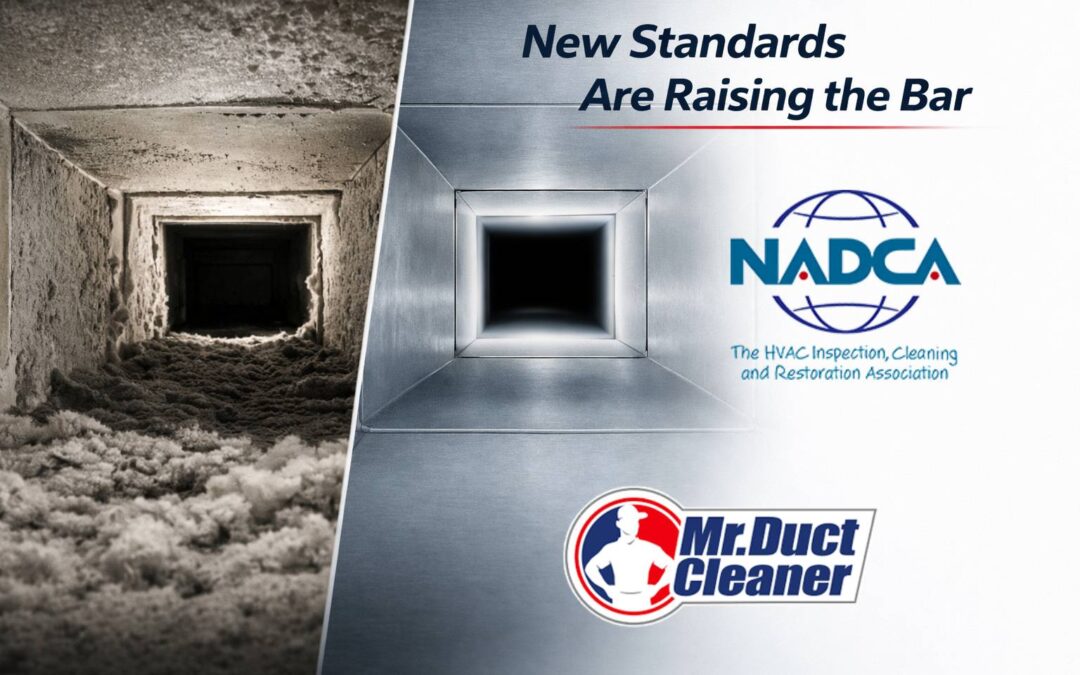
If you own or manage a commercial property, the rules around indoor air quality and HVAC cleaning are changing—and they’re changing fast.
New federal-level direction is beginning to formalize what professionals in the industry have been saying for years:
• Not all duct cleaning is created equal
• The way systems are cleaned now carries compliance implications
• Documentation and standards are becoming mandatory
What’s Driving These Changes?
Recent federal legislation tied to military housing has started requiring contractors to follow recognized industry standards for mold and indoor air quality.
Specifically:
• Contractors must follow IICRC S590 for mold remediation
• When HVAC systems are involved, NADCA ACR standards must be followed
Because when federal projects adopt standards like this, commercial buildings and insurance carriers typically follow.
What Is IICRC S590 (and Why Should You Care)?
The IICRC S590 Standard is the industry’s guide for professional mold remediation.
It defines:
• When fungal growth becomes a problem
• How contamination should be handled
• What qualifies as proper remediation
For building owners, this means:
• Microbial growth is no longer treated as a basic cleaning issue
• It is considered a remediation event
• Proper protocols must be followed
How NADCA Fits Into This (And Why It Matters More Than Ever)
When HVAC systems are involved in contamination:
• S590 points contractors toward NADCA ACR standards
• The ACR standard defines proper cleaning and restoration
• Verification and documentation are required
The ACR Standard establishes:
• Inspection procedures
• Cleaning requirements
• Containment and airflow control
• Measurable cleanliness standards
Commercial Work Is Moving Toward Certified-Only Requirements
On many commercial and government projects today:
• NADCA certification is required
• Certified specialists must be on staff
• Written documentation and verification are expected
This trend is expanding quickly into private commercial work.
If your contractor is not NADCA certified:
• They may not meet current project requirements
• They may not meet future compliance standards
Why “Fungal Growth” Is Becoming a Trigger Point
One of the biggest shifts is how fungal growth is handled.
Under these evolving standards:
• Mold in HVAC systems triggers remediation protocols
• Specialized containment procedures are required
• Documentation becomes part of the process
HVAC systems can distribute contaminants throughout an entire building if handled incorrectly.
The Risk of Hiring the Wrong Company
Low-cost or unqualified providers may:
• Skip containment procedures
• Fail to maintain proper negative pressure
• Spread contaminants instead of removing them
• Leave systems improperly cleaned
This is no longer just a performance issue.
It is becoming a compliance and liability issue.
What NADCA Certification Actually Means
If you’re unsure what to look for, read this:
https://mrductcleaner.com/what-does-nadca-certified-mean/
It explains:
• What NADCA certification requires
• Why it matters for your property
• How to identify a qualified contractor
The Bottom Line
The industry is moving toward:
• Standardized remediation protocols (S590)
• Verified HVAC cleaning processes (NADCA ACR)
• Certified professionals for commercial work
These changes are already underway and gaining momentum.
If you’re responsible for a home, office, or commercial facility, now is the time to make sure your HVAC system is cleaned the right way—not the cheap way.
For a free estimate, visit mrductcleaner.com or call 844-444-DUCT.